 2026 7th International Conference on Mechanical Engineering, Intelligent Manufacturing and Mechatronics
2026 7th International Conference on Mechanical Engineering, Intelligent Manufacturing and Mechatronics
2026 7th International Conference on Mechanical Engineering, Intelligent Manufacturing and Mechatronics
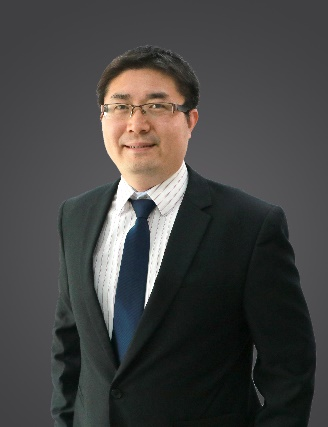
Zhang Zhijun, Professor and Doctoral Supervisor, Department Chair of Intelligent Science and Technology, School of Automation, South China University of Technology. He is an IEEE Fellow, Chair of IEEE CIS Guangzhou Chapter, and listed among the World's Top 2% Scientists. He is a recipient of National Young Talent, Director of Guangdong Provincial Key Laboratory of Large Model-based Embodied Intelligent Humanoid Robots for Universities in Guangdong, Deputy Chief Engineer of Huangpu Super Robot Research Institute, and Dean of Institute of Automation and Artificial Intelligence, Guangdong University of Petrochemical Technology.He heads the Bionic Intelligent Robotics Laboratory, Hongqian Joint Laboratory for Intelligent Human-Computer Interaction and Tianxiagu Laboratory for Artificial Intelligence and Digital Agriculture at South China University of Technology. He is a high-level scholar of the university, recipient of Guangdong Outstanding Youth Fund and Guangdong Outstanding Young Talents in Science and Technology Innovation.
His research focuses on the intersection of robotics, artificial intelligence and hydraulic engineering. He serves as a member of the Hybrid Intelligence Committee, Coexisting Robotics Committee, Adaptive Dynamic Programming and Reinforcement Learning Committee of Chinese Association of Automation, and a member of Visual Perception and Computing Committee of China Society for Image and Graphics. He is an editorial board member of multiple SCI journals including IEEE Transactions, a reviewer for over 20 international SCI journals, an evaluation expert for National Natural Science Foundation of China and high-tech enterprises in Guangdong Province.He put forward theories on variable-parameter dynamic neural networks and robot motion optimization, and independently developed prototypes such as intelligent dredging robots, pipeline inspection robots, underwater 3D detectors, intelligent interactive digital humans, intelligent pineapple flower-forcing robots, fault diagnosis and life prediction systems for power grid equipment, humanoid robots, mobile inspection robots, intelligent nursing robots and intelligent flying robots.
He has published more than 180 papers in prestigious international journals including Nature sub-journals, IEEE Transactions and related conferences. He has filed over 100 invention patents, with more than 60 granted. He has presided over or participated in over 30 projects including national key R&D programs, National Natural Science Foundation projects and horizontal research projects. Many of his patents and achievements have been funded and industrialized.His works have won the First Prize of Provincial Technological Invention, the First Prize of Provincial Science and Technology Progress, multiple International Conference Best Paper Awards and ESI Highly Cited Paper honors. In 2024, he was selected into Stanford University's World's Top 2% Scientists List (Lifetime Scientific Impact Ranking).
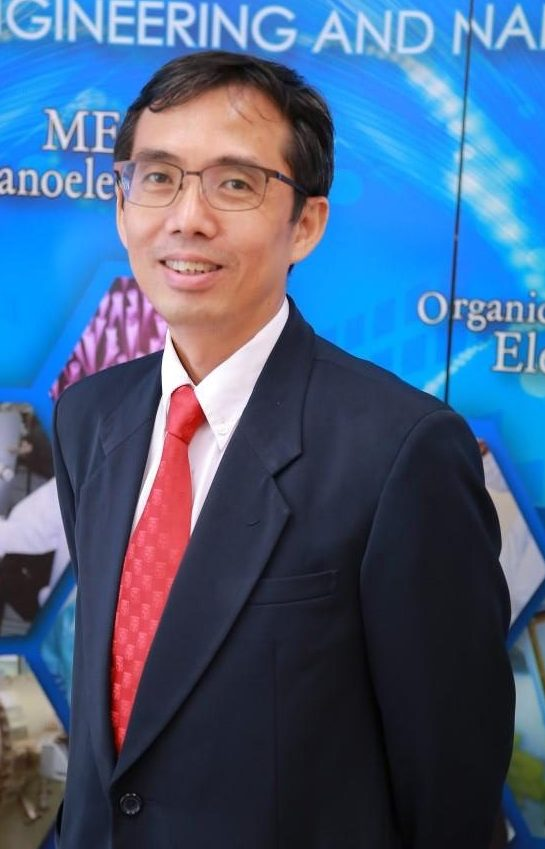
Dr. Siow Kim Shyong is a Senior Research Fellow and Associate Professor at the Institute of Microengineering and Nanoelectronics, Universiti Kebangsaan Malaysia (UKM). His research focuses on surface science and engineering, particularly plasma surface modification, interfacial phenomena, surface characterization, and advanced bonding technologies for electronic, biomedical, and agricultural applications. His work integrates surface analytical techniques with materials design to understand and control physicochemical processes occurring at surfaces and interfaces.
He obtained his Ph.D. in Engineering from the Adelaide University and holds Bachelor’s and Master’s degrees in Materials Engineering from Nanyang Technological University, Singapore, as well as a Master of Laws (LL.M.) in Intellectual Property from the University of Turin–WIPO. He is also a certified Project Management Professional (PMP®) and a Level 3 MATRiZ Practitioner.
Dr. Siow has more than 23 years of experience spanning academia, research institutes, and the semiconductor industry, including positions at Infineon Technologies, ON Semiconductor, the National University of Singapore, and A*STAR. He has authored over 100 peer-reviewed journal publications, invited talk and contributed extensively to research on plasma-enabled surface engineering, surface characterization, and materials joining technologies.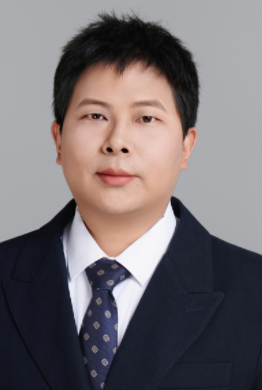
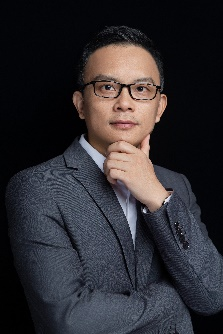
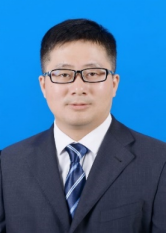
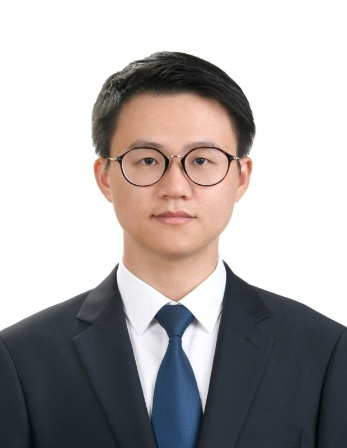
Fupeng Huo, Ph.D. and Postdoctoral Fellow, Osaka University, Japan. Currently serves as Associate Professor, College of Integrated Circuits, Nanjing University of Aeronautics and Astronautics (NUAA). Dr. Huo has long been engaged in systematic scientific research in the field of wide bandgap (WBG) power semiconductor packaging interconnection and thermal management.
In the past five years, he has presided over 3 scientific research projects, including 1 talent project under the "Overseas Talent Introduction Program of the Ministry of Education (MOE)", 1 enterprise horizontal project, and 1 project under the Japan Young Scientists Joint Research Program. He has also participated as a core member in 2 scientific research projects, including 1 national key project of Japan (responsible for a budget of 40 million Japanese Yen) and 1 Key Research and Development Program of Henan Province (International Cooperation).
In terms of academic outputs, he has published more than 30 papers in total, including 11 SCI-indexed papers and 4 EI-indexed papers as the first author in top journals in the field such as IEEE Transactions on Power Electronics and Journal of Materials Science & Technology. He has been granted 3 national invention patents.
His awards include: Best Student Paper Award, the 26th International Conference on Electronic Packaging Technology (ICEPT); Outstanding Technical Paper Award, ICEP 2025; First Prize of Science and Technology Award of Nonferrous Metals Industry; First Prize of Scientific and Technological Achievements Award of Henan Provincial Department of Education.